Does vape oil go bad?
Oil doesn't improve with age. Here's what time does to it — and how to slow it down.
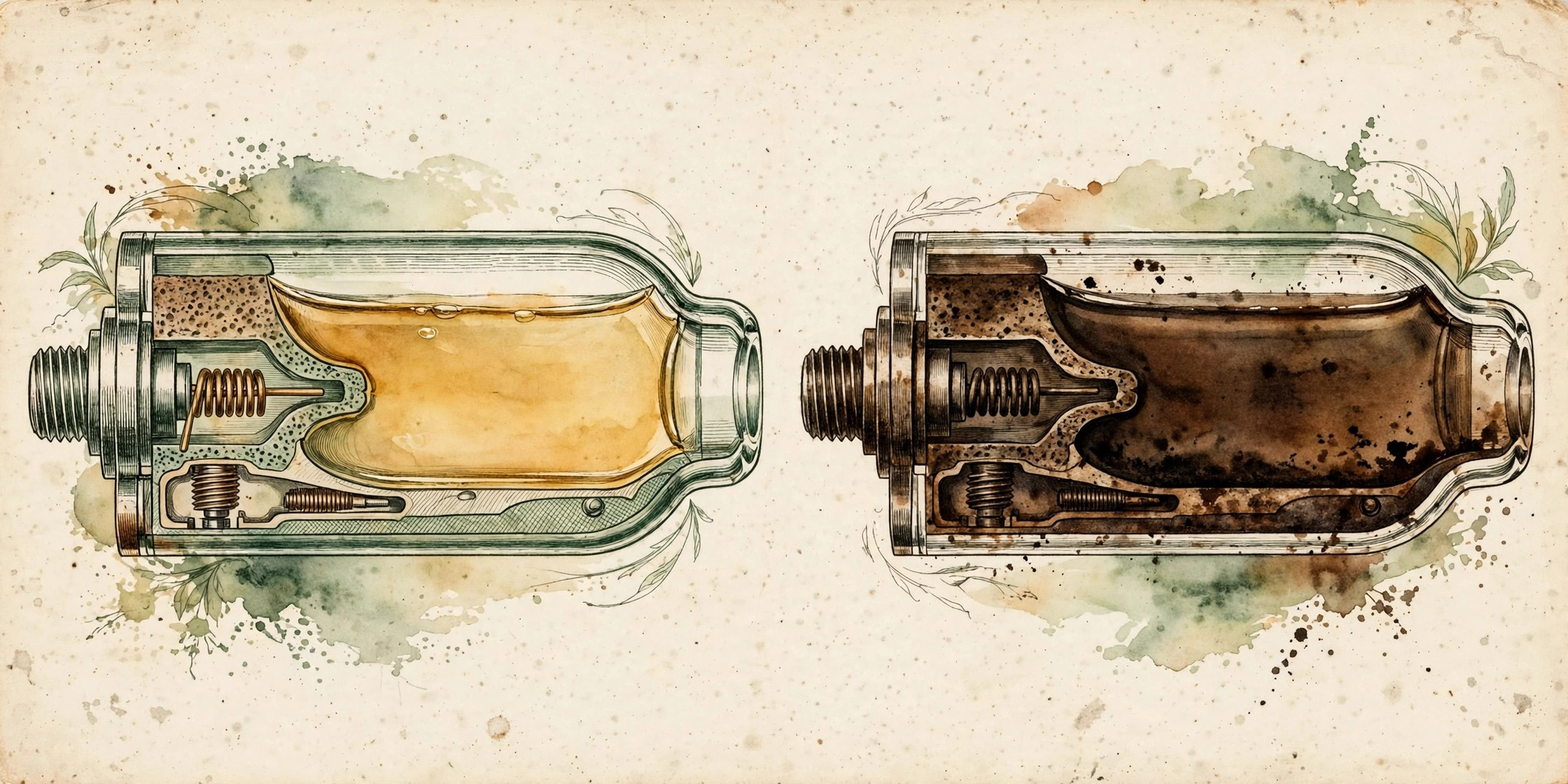 Fresh oil vs. oxidized oil — the visible record of age and air.
It ages — that's the honest word
"Expired" makes it sound like milk, and that undersells what's actually happening. Cannabis oil doesn't spoil the way food does. What happens is slower and quieter: the chemistry keeps going inside the cartridge long after it leaves the lab.
The oil you vape six months from now is not the oil that was tested six months ago. It's had six months of air, light, and temperature swings. The lab report describes the oil as it was, not as it is.
Oxidation: why the oil darkens
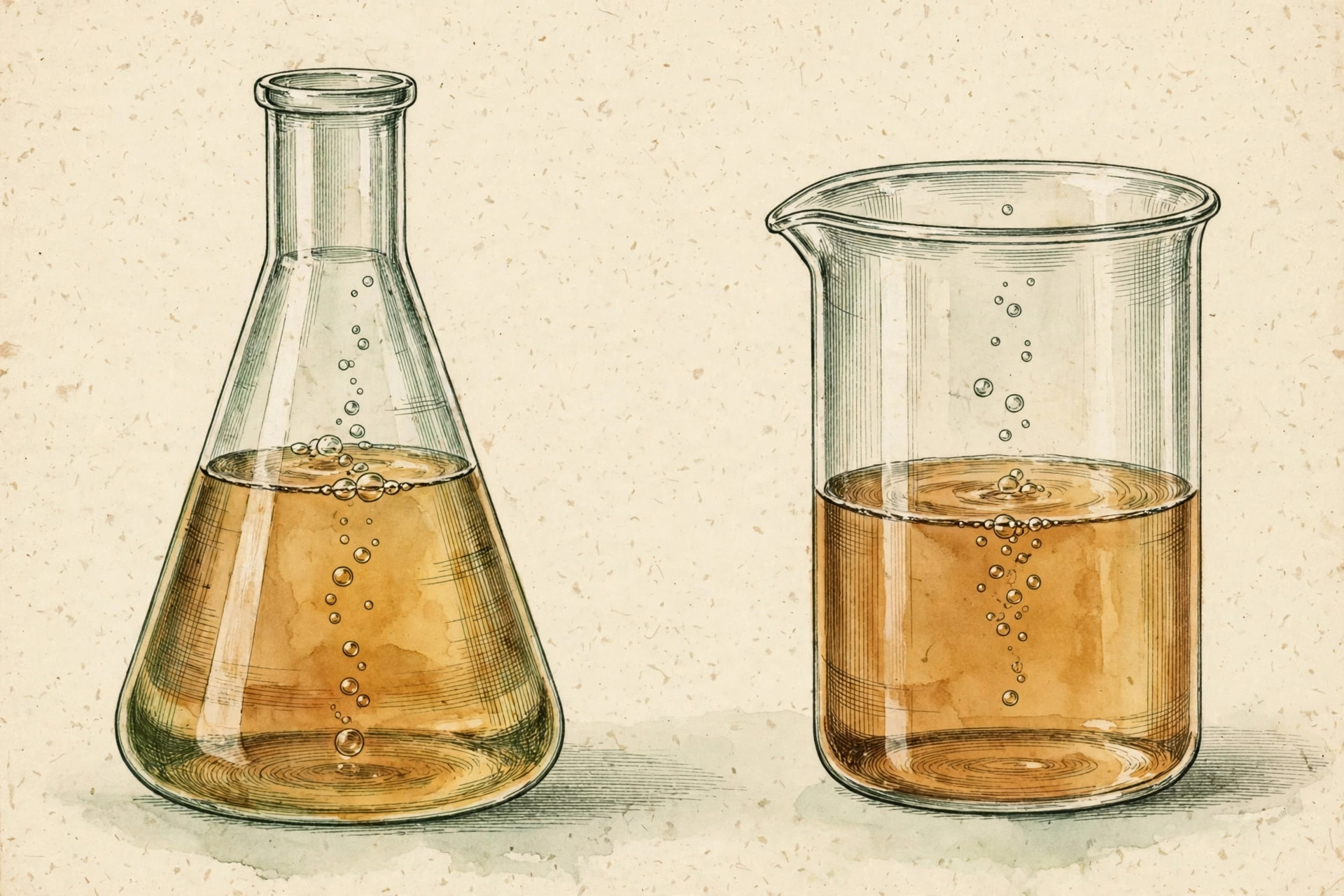 Oxidation is chemistry, not spoilage — oxygen, light, and heat keep reacting with the oil.
The visible sign of aging is color. A fresh cartridge is usually light amber; over months, the oil drifts toward deep brown. That darkening is oxidation — oxygen reacting with the oil's compounds.
Cartridges aren't perfectly sealed, and every draw pulls a little air through the chamber. Given oxygen, light, and heat, THC slowly converts to CBN — that's recorded chemistry, not a guess. The terpenes go first: they evaporate and oxidize, which is why an old cartridge smells flat before anything else seems to change.
Two honest caveats. Darker doesn't automatically mean bad, and lighter doesn't automatically mean fresh — some oils start darker than others. But steady darkening over months is the visible record of age and air exposure, and it's worth noticing.
The four enemies
Heat speeds up every reaction in the oil. A cartridge left in a hot car ages faster than one in a drawer. Of everything on this list, heat does the most damage the fastest.
Light — especially sunlight — breaks compounds down. A clear cartridge sitting on a sunny shelf is getting the worst of it.
Air is the oxidation story above. A half-used cartridge has more headspace — more air sitting against the oil — than a full one.
Time is the one you can't negotiate with. Even perfect storage doesn't stop aging; it only slows it down.
How to slow it down
A cool, dark place — a drawer beats a windowsill, every time. Store cartridges upright, mouthpiece up: it keeps the oil settled and the airway clear. Keep them sealed in the packaging until you plan to use them. And don't stockpile — buy closer to what you'll actually use, so less of it spends its life waiting.
None of this is complicated. It's the same instinct as keeping olive oil away from the stove.
Rosin clogs more than distillate — here's why
Not all oils behave the same in the cartridge, and this is the most practical difference between them. Distillate is a refined oil: the waxes and lipids from the plant were stripped out during processing, so what remains is thin and uniform. It flows.
Rosin is the opposite approach — pressed mechanically from the plant with nothing removed. That means the waxes, lipids, and heavier compounds are still in there. The oil is thicker, and those compounds can stiffen or separate, especially as the cartridge cools down between uses. Thicker oil plus a narrow airway equals clogging.
So if your rosin cartridge clogs and your distillate one never does, nothing is wrong with the rosin — it's behaving like rosin. A few plain habits help: store it upright at room temperature, give a cold cartridge a few minutes in your hands before you draw on it, and take gentler draws — hard pulling on thick oil just packs the clog tighter.
This isn't a quality verdict either. It's the tradeoff of the method: distillate's refinement buys easy flow; rosin's wholeness costs a little patience.
Read the dates
Two pieces of print matter more than the flavor name: the packaged (or manufactured) date and the test date. The packaged date tells you when the oil was sealed; the test date tells you when the lab analyzed it. Both describe the oil back then.
A test date from two years ago tells you two things: the cartridge has been sitting around, and the lab result is a photograph of old oil. Neither is a reason to panic — both are reasons to pay attention.
When to let one go
A harsh or burnt taste that wasn't there when you started it. Oil that's gone very dark and thick. Aroma gone completely flat. A cartridge that clogs no matter what you do. None of these are safety verdicts — they're quality signals, the oil telling you its good months are behind it.
The safety story doesn't change with age: licensed product, a batch number that matches the COA, a named lab. That's still the whole of it — the safety basics cover it.
An honest close
You can't stop oil from aging — you can only decide how fast. Cool, dark, upright, sealed, bought close to when you'll use it. And when the oil has clearly turned — dark, harsh, flat — let it go. The habit of checking dates costs nothing, and it's the difference between vaping the oil that was tested and vaping whatever time made of it.
Cannascenti is an education reference, not medical advice. Cannabis laws vary by state and country — buy only where it is legal, and only from licensed sellers.
 Mary JaneCannascenti's AI guide