Solvent vs. solventless: the two roads.
Every concentrate on the shelf got there by one of two methods. This is the split everything else hangs on.
The question every concentrate answers
All concentrates start with the same problem: the resin you want is mixed into plant material you don't. Getting the resin out requires separating trichome heads from everything else — and there are exactly two philosophies for doing it.
Road one: solvents
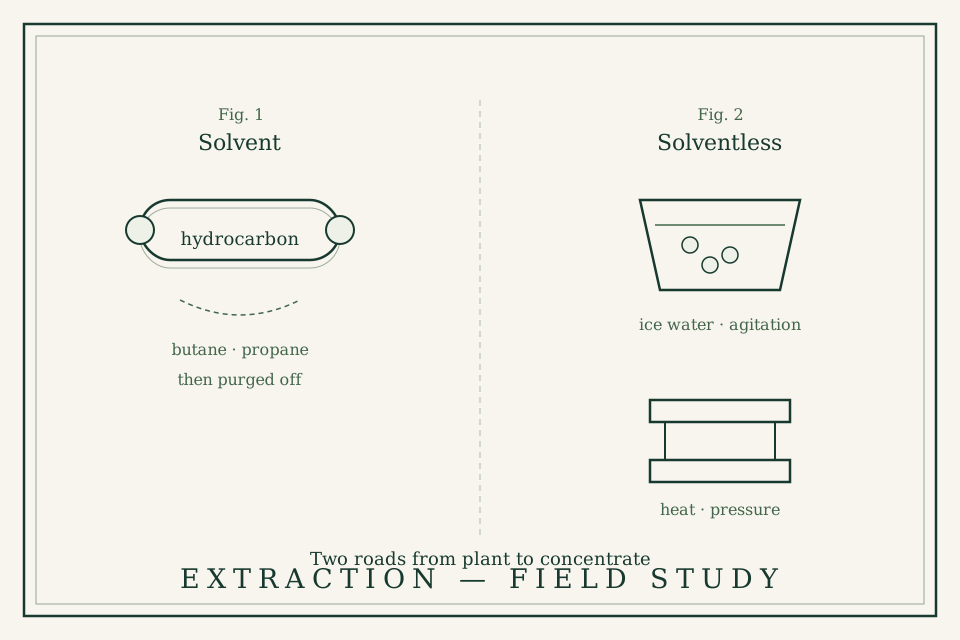
A solvent is a liquid that dissolves the resin so it can be collected. The common ones in licensed production are hydrocarbons (butane and propane), CO2 (carbon dioxide under pressure), and ethanol (high-proof alcohol). The plant material soaks in the solvent, the resin dissolves into it, and then the solvent is removed.
That removal step is called purging. Heat and vacuum pull the solvent back out of the extract, leaving the concentrate behind. Licensed products are tested for residual solvents — the lab report shows how much, if any, remains. That test exists because the method uses chemicals; the test is how you verify they're gone.
Road two: solventless
Solventless methods never introduce a chemical solvent. Instead they use physics: ice water and agitation (bubble hash — trichome heads sink, plant material floats), dry sifting (shaking kief through mesh screens), or heat and pressure (rosin — squeezing resin out like an olive press).
Nothing needs purging because nothing was added. The tradeoff is yield: solventless methods typically recover less resin from the same starting material than solvent methods do.
Neither road is a quality verdict
Solvent vs. solventless tells you how a concentrate was made. It does not tell you which one is better, cleaner, or stronger — those depend on the starting material, the skill of the maker, and the specific batch. A masterfully made hydrocarbon extract and a masterfully made rosin are both masterfully made; a sloppy version of either is sloppy.
When a label or a budtender leads with the method, treat it as process information, not a ranking.
Cannascenti is an education reference, not medical advice. Cannabis laws vary by state and country — buy only where it is legal, and only from licensed sellers.
 Mary JaneCannascenti's AI guide